
/1 min read
When a Simple Label Mistake Signals a Bigger Industry Gap
Why the 2025 Wismettac case proves food safety today is as much about information systems as it is about ingredients.

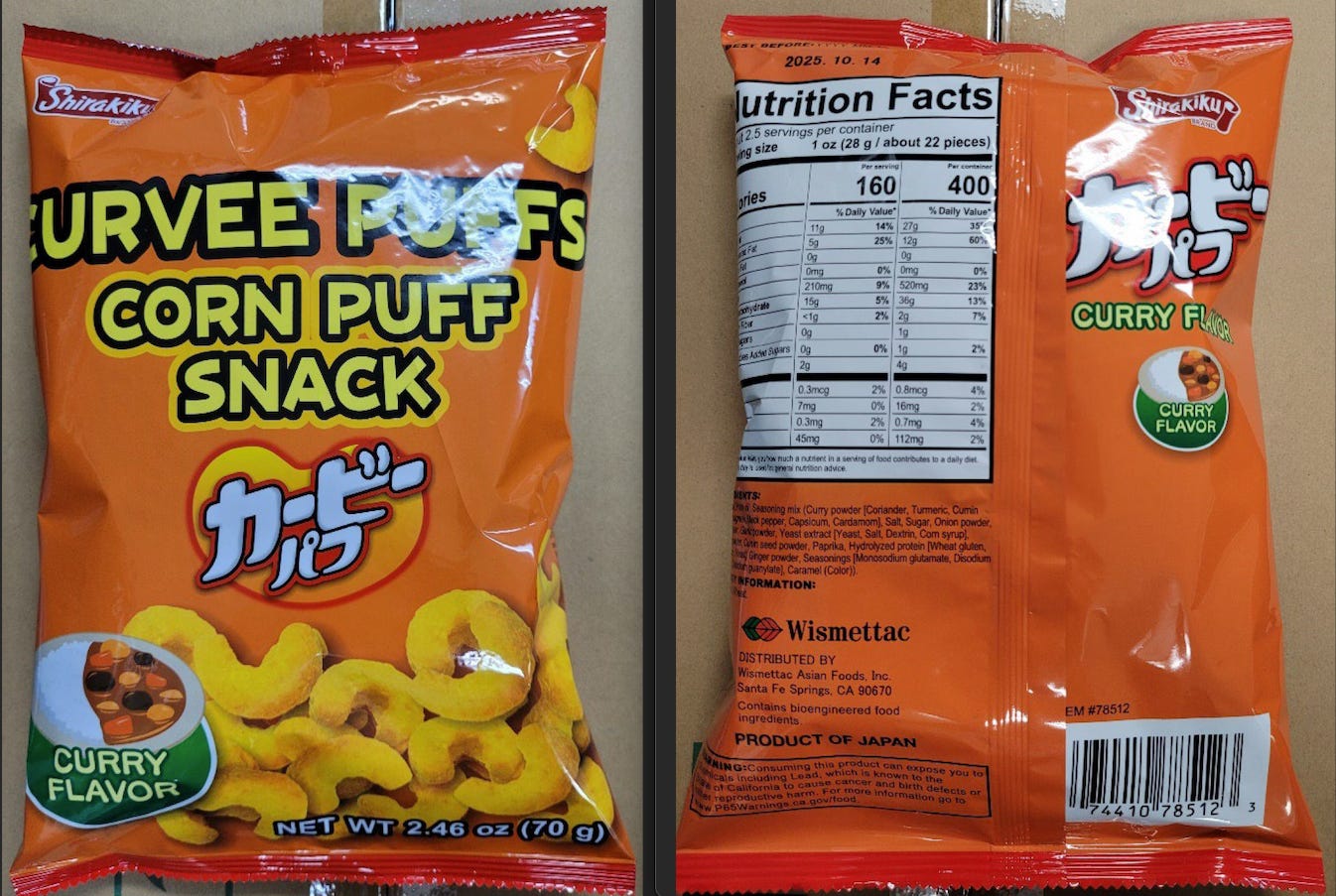
In January 2025, Wismettac Asian Foods, Inc., a long-standing importer and distributor based in Santa Fe Springs, California, issued a nationwide recall of its Shirakiku Curvee Puffs Corn Puff Snack (Curry Flavour).
The reason: undeclared milk - a major allergen missing from the product label.
The 2.46 oz packages were distributed across the United States and exported to Mexico.
No illnesses were reported.
But the risk was real.
For individuals with dairy allergies, an undeclared allergen is not a minor labeling issue - it is a potentially life-threatening exposure.
A Small Recall. A Larger Pattern.
This case is not isolated.
The 2025 FDA recall data shows that labeling compliance failures continue to represent a substantial share of enforcement actions.
Nearly 413 recalls last year were tied to labeling issues, many involving undeclared allergens and classified as serious health risks.
Microbial contamination may dominate headlines.
But allergen recalls tell a different story.
They are not biological failures.
They are information failures.
When safety depends on accurate labeling, information accuracy becomes a life-critical control point.
How Do These Breakdowns Happen?
Unlike contamination events, allergen recalls typically trace back to operational gaps:
Incomplete ingredient traceability
Manual, spreadsheet-based label reviews
Disconnected systems between formulation and packaging
Insufficient verification before production
These are not failures of intent.
They are failures of data flow.
When ingredient data does not seamlessly translate into labeling logic risk accumulates silently.
Preventing the Next Recall
Reducing labeling risk requires structural visibility, not reactive corrections.
That means:
• Automated ingredient intelligence that flags allergens
• Embedded label validation within production workflows
• Continuous, data-driven compliance auditing
• Traceable links between formulation decisions and final packaging
The lesson from the Wismettac recall is straightforward:
Preventable information gaps should never become consumer risk.
Written by

Nijat Guliyev
Removing Compliance Bottlenecks to Accelerate Food & Beverage Market Entry | Sales Director @ Mergen AI
Keep reading
More from the blog
/5 min read
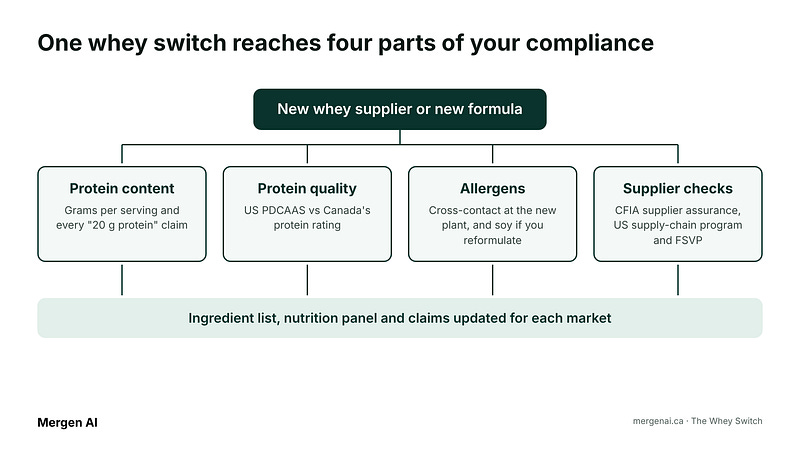
The Whey Switch: How a Dairy Tariff Fight Lands on Your Label
Tariffs and a US whey ban are forcing fast supplier switches. Here’s what that can break on your label.

/6 min read
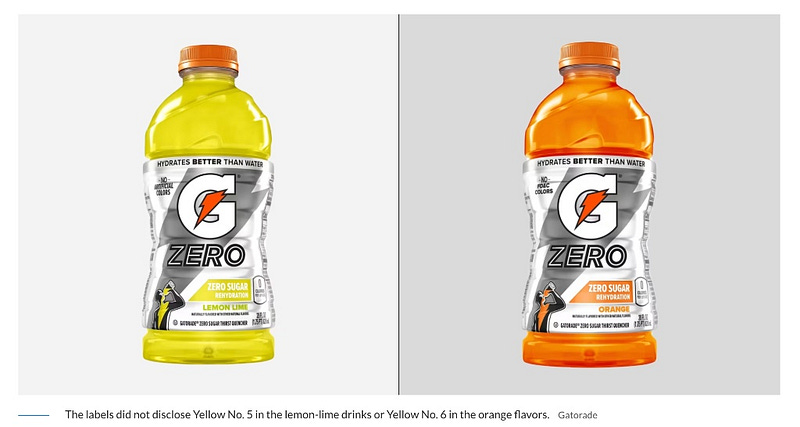
The Changeover Gap: What the Gatorade Dye Recall Teaches Every Label Team
PepsiCo promised natural colours, then recalled 122,021 cases for undeclared synthetic dyes. What went wrong, and how to avoid it in your own phase-out.
/7 min read
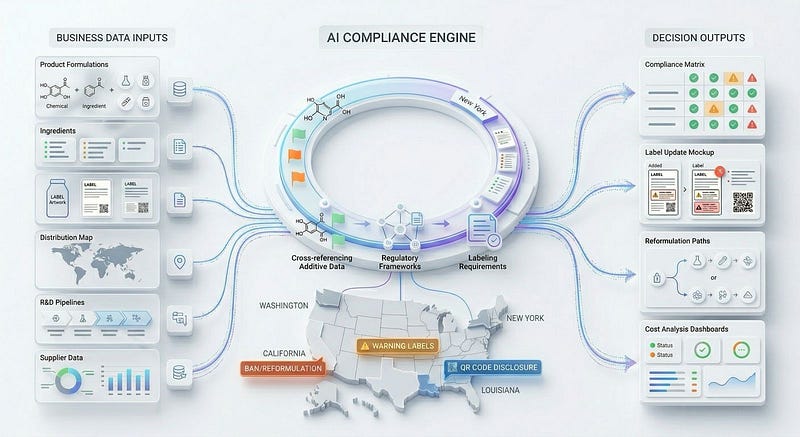
AB 418 Marks the Start of a New Compliance Model
From static standards to continuous, state-specific execution.
Newsletter
New posts, straight to your inbox.
F&B compliance insights, curated from real compliance work. Free, and you can unsubscribe any time.