
/6 min read/compliance, beverage, regulatory, ai, fda, recall, label
The Changeover Gap: What the Gatorade Dye Recall Teaches Every Label Team
PepsiCo promised natural colours, then recalled 122,021 cases for undeclared synthetic dyes. What went wrong, and how to avoid it in your own phase-out.

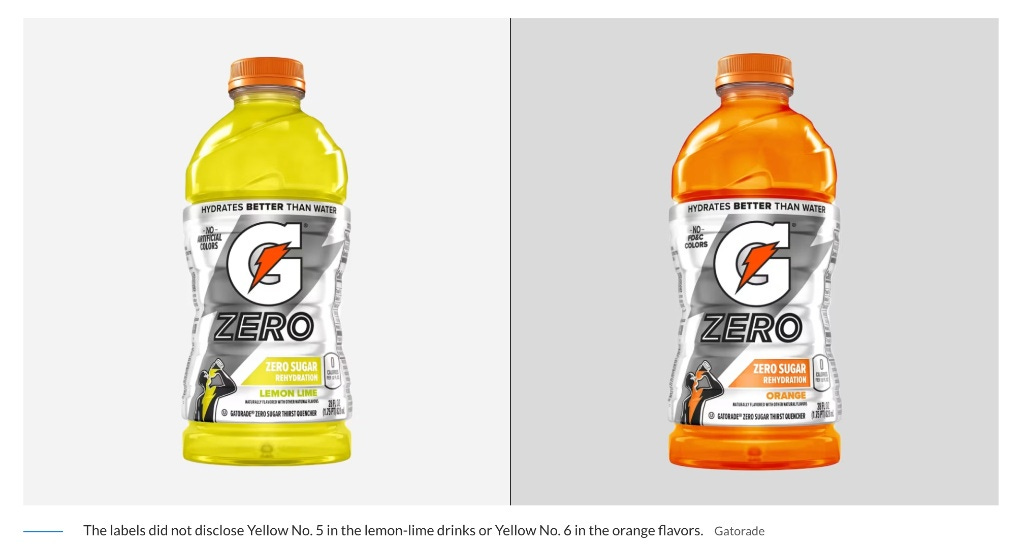
On April 16, 2026, PepsiCo announced that Lemon Lime, Orange and Fruit Punch in Gatorade Thirst Quencher and Gatorade Zero would drop FD&C colours that fall, switching to colours from fruits and vegetables.
Five months later, two of those flavours were pulled from shelves in 37 states. They did contain synthetic dyes. The label just didn’t say so.
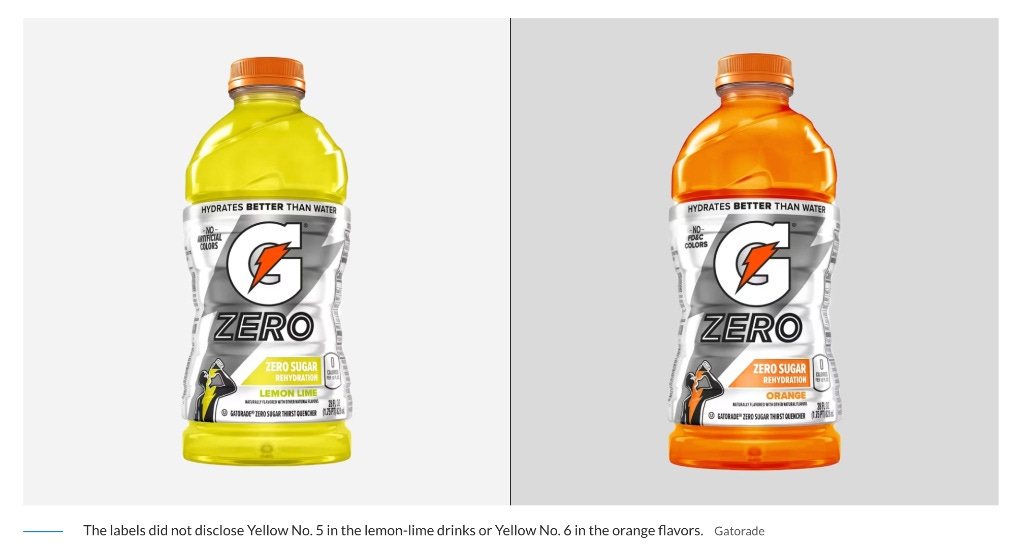
Anyone who has managed a reformulation can picture how this happens. New artwork is approved and printed. Legacy colour blend is still in the warehouse. The production schedule doesn’t wait. With most of the industry now removing synthetic dyes at once, this is the risk every label team should be planning around.
What happened
PepsiCo began a voluntary recall on September 25, 2026 of 122,021 cases of 28 oz Gatorade Lemon Lime, Lemon Lime Zero, Orange and Orange Zero. The bottles contained FD&C Yellow No. 5 and/or Yellow No. 6, which were not on the label. FDA classified the recall Class II on October 2 (H-0009-2027). Fifteen lots are affected, produced between July 22 and September 11, 2026. No illnesses have been reported, and PepsiCo issued no press release.
Both dyes are legal. The problem is disclosure: US rules require certified colours to be declared by name, and tartrazine (Yellow 5) specifically, because a small number of people react to it.
How it likely happened
PepsiCo has not explained the cause, and it is not public how the problem was found. What follows is our analysis, based mainly on timing.
The recalled flavours are exactly the ones scheduled to switch away from FD&C colours “later this fall.” The affected production window sits right before that switch. The simplest explanation is that labels written for the new formula met product made with the old one.
In a real plant, that can happen several ways. New labels reach the line before the last legacy batches are finished. A colour concentrate pre-blended with FD&C dyes stays in inventory and gets used under the new recipe. One site or co-packer switches labels on a different date than its formula. None of these is unusual. Each is a hand-off between R&D, regulatory, packaging, planning and the line, and each becomes more likely when dozens of SKUs change at once.
A familiar pattern
Undeclared colours are a small but steady recall category. Connecticut’s Charles Boggini Company recalled lemonade and cola flavouring bases over undeclared Yellow 5 and Red 40. In Q3 2025, 3.7 million wasabi packets were recalled for an undeclared colour. In Canada, CFIA oversaw the 2020 recall of Pearl’s Perogies for undeclared tartrazine.
The wider category, labels that don’t match the product, is much bigger. Undeclared allergens accounted for 38.8% of US food recalls in 2025. A peer-reviewed analysis of 24,761 FDA recall records found pathogens dominate over the long run, but labelling failures remain the most frequent and the most preventable cause year to year.
The changeover wave ahead
Gatorade is early, not alone. Most companies selling in North America face a stack of colour and labelling deadlines over the next three years:
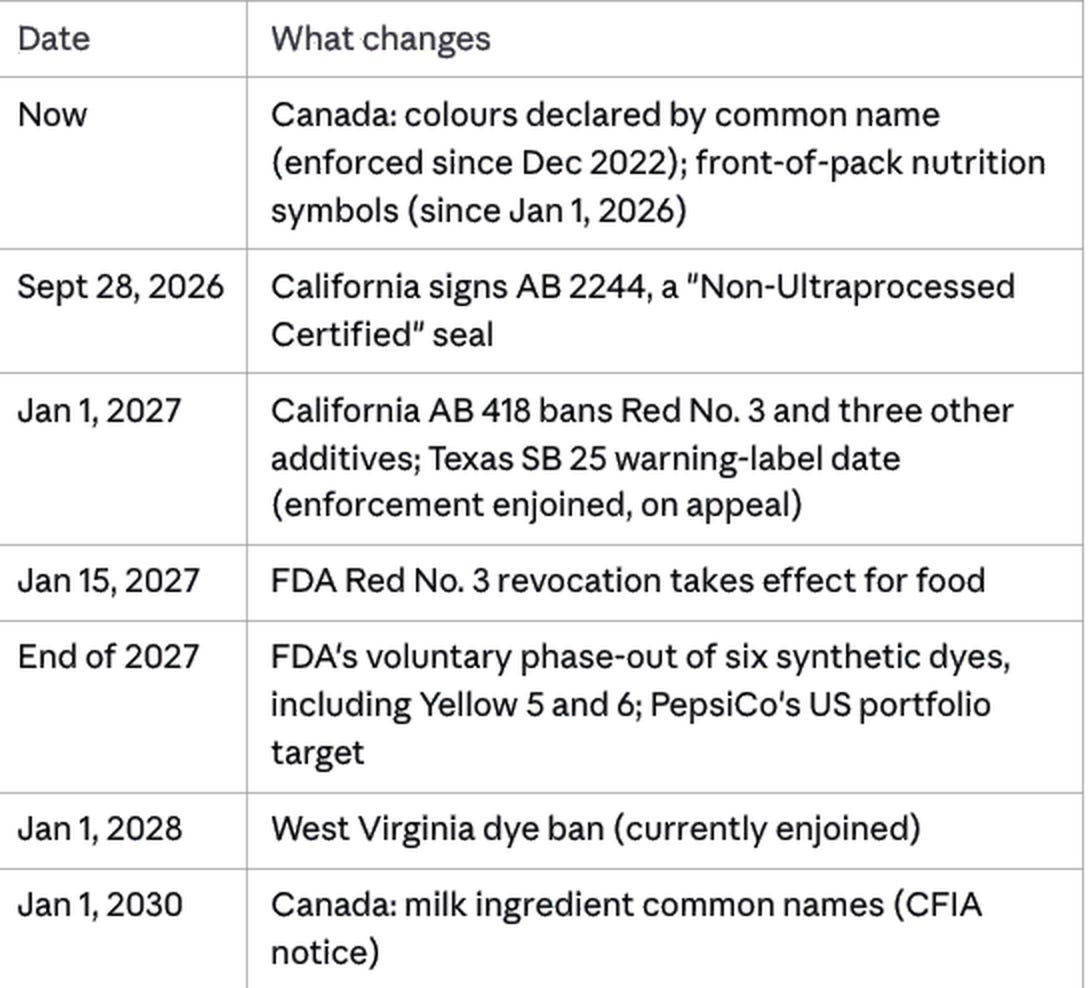
Each deadline is manageable alone. Together, they mean more label changeovers in three years than most teams run in ten.
The Canadian angle
The recalled lots went only to US states, and Canadian Gatorade is labelled differently: a Canadian retail listing for Lemon Lime declares “Tartrazine” by its Canadian common name.
That detail matters for every cross-border brand. The US accepts “Yellow 5.” Canada requires “tartrazine,” in English and French. So one dye phase-out means at least two ingredient statements per SKU, often on two schedules and from two plants. That doubles the number of places a formula and a label can drift apart.
CFIA also tests for this directly. Its targeted food colour surveys sample brightly coloured products, including those marketed as free of synthetic colours.
A changeover checklist
Lock formula to label. Every label version points to one formula version. Neither can be released without the other.
Switch by lot, not by date. Name the first lot of the new formula, and run new packaging only from that lot onward.
Run down legacy materials on purpose. Find every colour, flavour base and pre-blend containing the old dye. Use it up, quarantine it or destroy it, and block it in the system.
Separate old and new packaging. They never share a staging area.
Clear the line. Remove the previous run’s labels and ingredients, with a second-person sign-off.
Confirm co-packers in writing. Send each site the formula–label pairing and switchover lot.
Test the first lots. Retain samples and confirm the old dye is gone.
Keep a changeover register. One line per SKU and market: formula, label, switchover lot, sites, sign-offs.
Treat each market as its own changeover. US, Canadian and state versions each get checked.
How Mergen AI runs a dye phase-out
A checklist works when someone has time to run it for every SKU. During a phase-out, nobody does. That is the work Mergen AI’s agents take on.
Here is how a company removing Yellow 5 from a citrus beverage line, sold in the US and Canada, would run it:
Find every exposure: Substance Phase-Out. Mergen AI connects to your ERP, PLM and specification files and finds every SKU, formula and ingredient containing the dye, including pre-blends where it is easy to miss. It then tracks each one through replacement.
See the knock-on effects: Ingredient Substitution Impact Assessment. For each SKU, it maps what the new colour changes: ingredient statements, “no artificial colours” claims, state labels and the Canadian common-name declaration.
Build every market version: Multi-Market Label Variant Generation and State Additive Labels. One formula produces the correct US, Canadian and state-specific label versions in a single workflow.
Gate the release: Formulation Compliance Review and Label Artwork Regulatory Review. Before artwork goes to print, the agents check it against the active formula and each market’s rules. A label that drops “Yellow 5” while the formula still contains it is flagged for your team.
Watch the whole portfolio: Portfolio Compliance Dashboard. One live view of every SKU in transition: which markets and sites are matched and which are still open. Your changeover register, kept current automatically.
Stay ahead of the next rule: Daily Regulatory Feed Triage and Regulatory Change Impact Assessment. When a new dye rule, court ruling or CFIA notice lands, you see which of your products it touches.
Every step goes to your team for review and approval, and every decision is saved in a full audit trail. When a retailer or inspector asks how you knew the label was right, the answer is already on file.
Your next step
If you have a dye phase-out, a Red No. 3 reformulation or a US–Canada label overhaul on your 2027 plan, there are two easy ways to start:
Book a free 30-minute F&B regulatory consultation. Bring one product and one market. We’ll walk through your changeover risks with you. No sales pitch. Book here.
Try it on your own SKU. Mergen AI’s free plan includes workflow runs every month, with no credit card required. Run Substance Phase-Out on one product and see what it finds. Start free.
Over to you: what’s the hardest hand-off in your changeover process: artwork to procurement, formula to the plant, or headquarters to the co-packer? Tell us in the comments.
Written by

Nijat Guliyev
Removing Compliance Bottlenecks to Accelerate Food & Beverage Market Entry | Sales Director @ Mergen AI
Keep reading
More from the blog
/5 min read
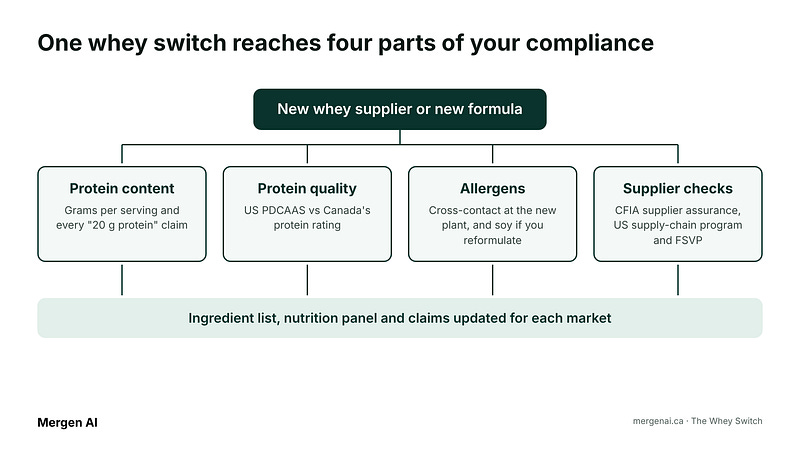
The Whey Switch: How a Dairy Tariff Fight Lands on Your Label
Tariffs and a US whey ban are forcing fast supplier switches. Here’s what that can break on your label.

/7 min read
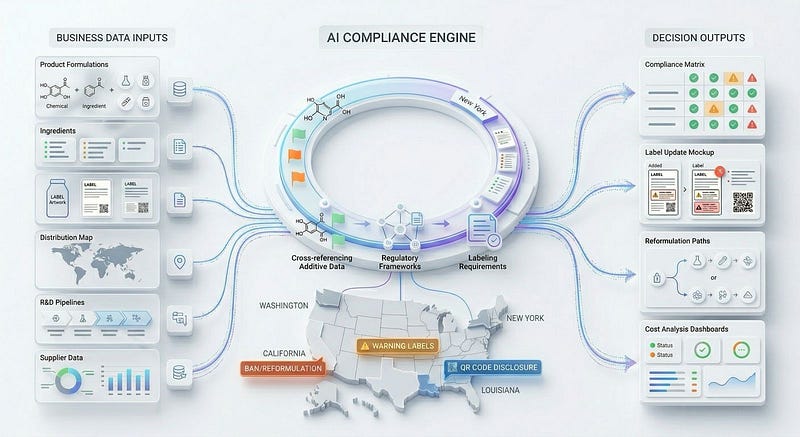
AB 418 Marks the Start of a New Compliance Model
From static standards to continuous, state-specific execution.
/4 min read
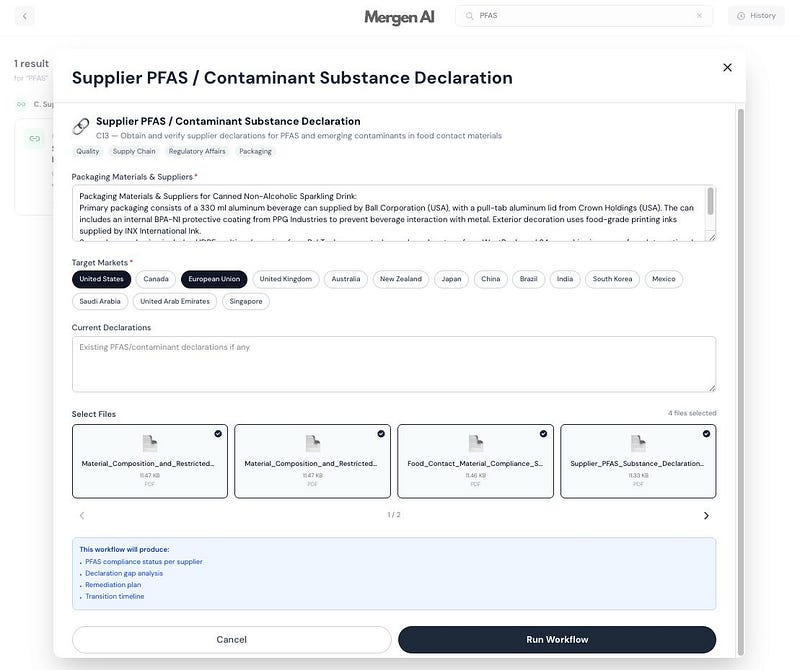
August 2026 Is Closer Than It Looks: Preparing for PFAS Restrictions in Food Packaging
Food manufacturers must now verify packaging chemistry across suppliers as PFAS regulations expand across global markets.
Newsletter
New posts, straight to your inbox.
F&B compliance insights, curated from real compliance work. Free, and you can unsubscribe any time.