
/3 min read
Supplier Compliance: The Hidden Infrastructure Behind Food & Beverage Safety
Why supplier verification, documentation, and traceability are becoming the operational backbone of modern food manufacturing.

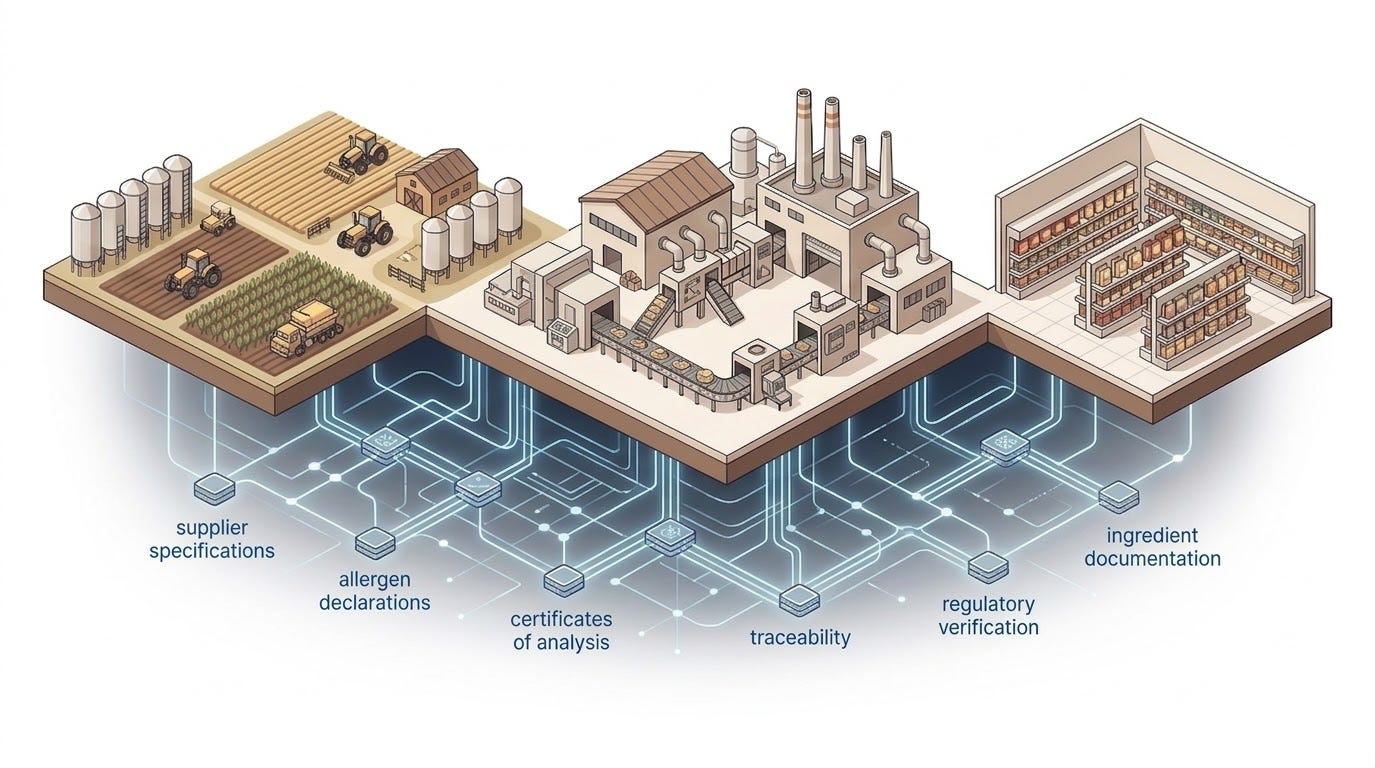
Most food safety discussions focus on what happens inside the factory.
But in reality, product safety begins long before ingredients arrive at the facility. It starts with suppliers - the companies that provide the raw materials, additives, packaging components, and ingredients that manufacturers rely on every day.
Supplier compliance refers to the systems companies use to ensure that these suppliers meet regulatory requirements, safety standards, and internal specifications. This includes verifying ingredient specifications, allergen declarations, certificates of analysis, traceability data, and safety documentation.
For many manufacturers, supplier documentation forms the foundation of regulatory assurance.
A spec sheet determines how an ingredient can be used.
An allergen declaration influences labeling.
A certificate validates that materials meet quality and safety standards.
But the management of this information is rarely structured.
Supplier compliance often lives across email threads, spreadsheets, shared folders, and PDF attachments. Teams spend hours requesting updated documents, verifying versions, and manually checking whether supplier information aligns with regulatory requirements.
What should be a structured compliance process quietly turns into operational friction.
And when supplier information is incomplete or outdated, the consequences can include production delays, compliance risks, and audit exposure.
Why Supplier Compliance Is Critical in Food & Beverage
Few industries depend on supplier compliance as heavily as Food & Beverage.
Unlike many manufacturing sectors, F&B products are directly tied to ingredient composition, allergen presence, and regulatory labeling requirements. A single supplier specification can affect everything from nutritional declarations to allergen labeling and product approvals.
Regulatory frameworks make supplier verification a formal requirement.
Under the Food Safety Modernization Act (FSMA) in the United States, manufacturers must verify that their suppliers meet preventive control requirements.
Global food safety certification programs under GFSI also require documented supplier approval and monitoring programs.
In Canada, CFIA regulations require traceability systems and documented preventive controls across the supply chain.
When supplier compliance breaks down, the risks are real:
allergen misdeclarations
ingredient specification mismatches
traceability gaps during recalls
missing supplier documentation during audits
Despite these risks, supplier compliance workflows remain fragmented in many companies.
QA teams review PDFs. Procurement tracks supplier contacts in spreadsheets. Regulatory teams manually verify documentation. Updates arrive through email attachments with unclear version histories.
The process works - but slowly, and often with unnecessary risk.
Where Operational Bottlenecks Appear
Inside most F&B companies, supplier compliance challenges follow predictable patterns.
New suppliers must be approved before materials can be used, which requires reviewing certifications, specifications, and safety documentation.
Supplier spec sheet changes introduce another layer of complexity. When an ingredient formulation or processing method changes, teams must determine whether labeling, allergen declarations, or regulatory approvals are affected.
Companies must also perform periodic supplier requalification cycles, requesting updated certifications and confirming that documentation remains valid.
Other operational tasks include verifying allergen declarations, tracking raw material country-of-origin, and managing supplier non-conformance when materials deviate from specifications.
Each step is necessary. But when managed through documents and manual verification, these processes become difficult to track and scale.
How Mergen AI Helps
Mergen AI approaches supplier compliance as an operational system rather than a document repository.
Instead of relying on manual verification across disconnected files, Mergen AI structures supplier compliance into executable workflows that guide teams through each verification process while maintaining traceability.
For example, workflows support new supplier onboarding qualification, ensuring that supplier documentation is systematically validated before approval.
When suppliers update documentation, supplier spec sheet change processing helps teams assess potential downstream impact on formulations, labeling, or regulatory requirements.
Compliance cycles are supported through annual supplier re-qualification, while allergen risks can be managed through supplier allergen declaration verification and incoming material allergen verification.
Operational flexibility is supported through alternate supplier qualification, allowing companies to evaluate new suppliers without losing compliance visibility.
When issues arise, supplier non-conformance management provides structured documentation and corrective action tracking.
Finally, raw material country-of-origin tracking helps maintain sourcing transparency - a growing requirement for traceability and regulatory oversight.
Together, these workflows shift supplier compliance from manual verification to structured execution.
Compliance Is Becoming Infrastructure
Supplier compliance has historically been treated as administrative work - necessary, but secondary to production.
In reality, it is foundational infrastructure.
Every supplier specification, allergen declaration, and certification becomes part of the system that ensures product safety, regulatory alignment, and audit readiness.
As Food & Beverage supply chains grow more complex, the companies that succeed will be those that treat compliance not as paperwork, but as operational architecture.
The future of compliance will not be managed in documents.
It will be executed in systems.
Written by

Nijat Guliyev
Removing Compliance Bottlenecks to Accelerate Food & Beverage Market Entry | Sales Director @ Mergen AI
Keep reading
More from the blog
/5 min read
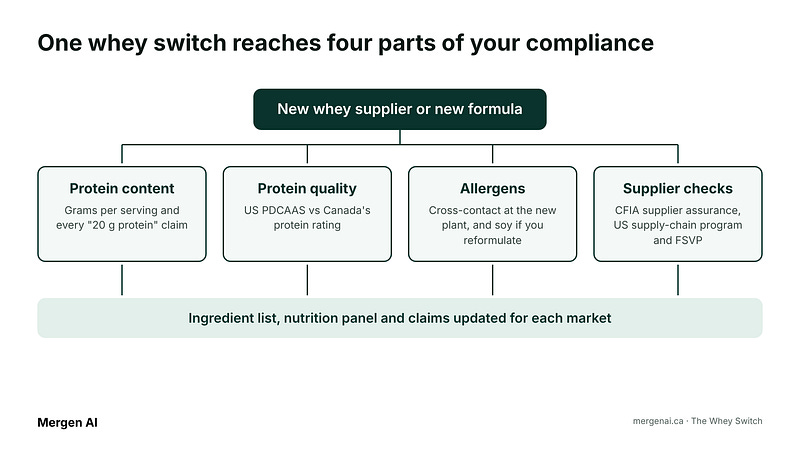
The Whey Switch: How a Dairy Tariff Fight Lands on Your Label
Tariffs and a US whey ban are forcing fast supplier switches. Here’s what that can break on your label.

/6 min read
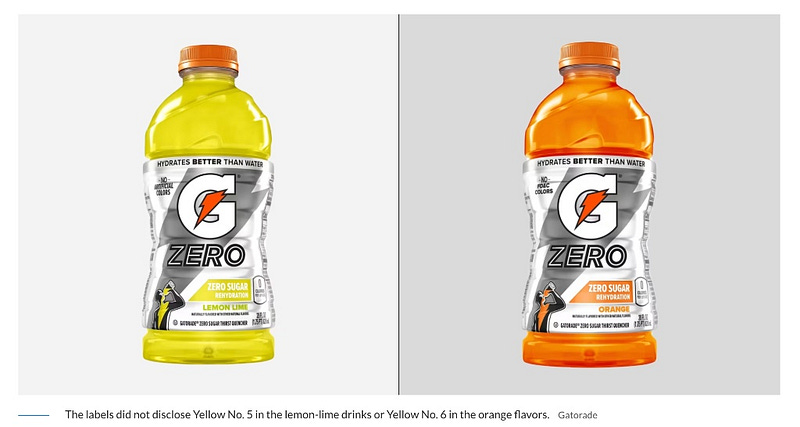
The Changeover Gap: What the Gatorade Dye Recall Teaches Every Label Team
PepsiCo promised natural colours, then recalled 122,021 cases for undeclared synthetic dyes. What went wrong, and how to avoid it in your own phase-out.
/7 min read
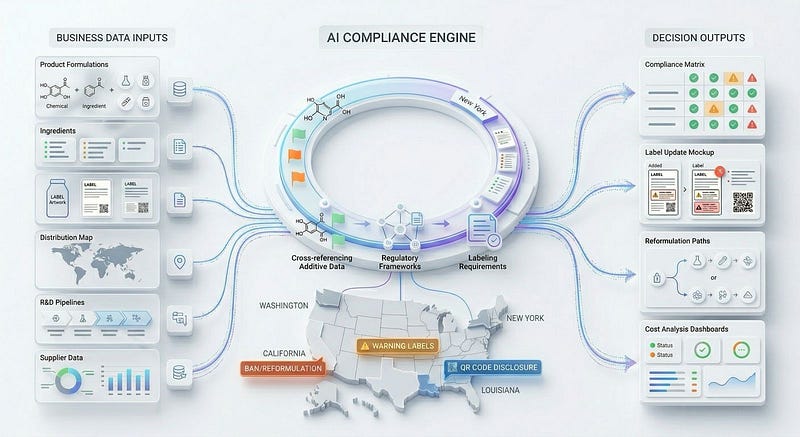
AB 418 Marks the Start of a New Compliance Model
From static standards to continuous, state-specific execution.
Newsletter
New posts, straight to your inbox.
F&B compliance insights, curated from real compliance work. Free, and you can unsubscribe any time.