
/1 min read
Inside the Compliance Context Graph: The Future of Regulatory Execution.
The structural shift turning compliance from a bottleneck into a competitive advantage.


For many food and beverage brands, compliance still lives in checklists. Requirements are tracked in spreadsheets, approvals sit in email threads, and documentation is assembled at the end of the process. This approach can work at a small scale - but it breaks quickly as products, markets, and regulations multiply.
The core issue isn’t a lack of knowledge. It’s a lack of execution context.
Checklists tell teams what needs to be done, but they fail to capture how compliance was achieved: which rules were applied, which data was used, who approved what, and why decisions were made. When that context is missing, audits become reconstruction exercises, launches slow down, and risk increases.
This is where the Compliance Context Graph comes in.
Rather than treating compliance as a series of disconnected tasks, a Compliance Context Graph models regulatory work as a living system. Every ingredient validation, label check, approval, and document generation is connected - not just stored. Each action is linked to the regulation it satisfies, the data it relies on, and the decision-maker involved.

In practical terms, this changes how compliance operates day to day. Instead of chasing documents and re-validating work late in the process, teams can see compliance as it is being executed, in real time. When a rule changes, the system understands what downstream assets are affected. When a label is updated, the rationale and approvals are already embedded in the workflow.
Launch™ by Mergen AI uses AI agents to execute compliance in real time while continuously updating the Compliance Context Graph.
For founders and GMs, the takeaway is straightforward: compliance doesn’t scale with more checklists. It scales with systems that capture context and execute continuously.
Moving from checklist-based compliance to an execution model isn’t just a process upgrade - it’s a structural advantage for brands that want to launch faster, expand confidently, and operate without surprises.
Written by

Nijat Guliyev
Removing Compliance Bottlenecks to Accelerate Food & Beverage Market Entry | Sales Director @ Mergen AI
Keep reading
More from the blog
/5 min read
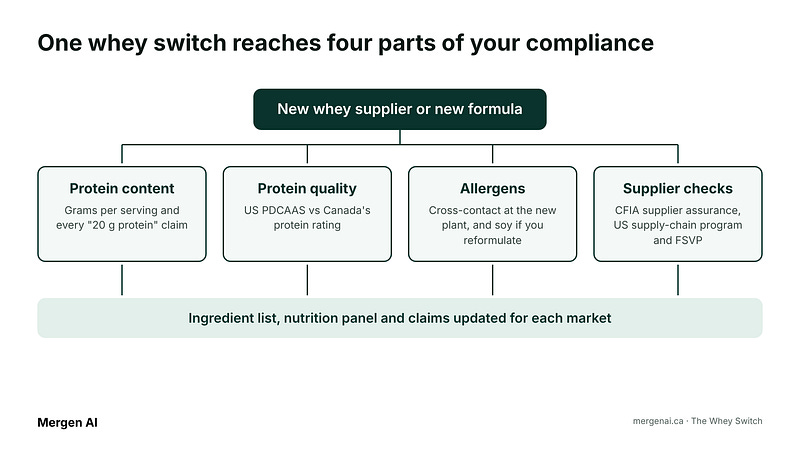
The Whey Switch: How a Dairy Tariff Fight Lands on Your Label
Tariffs and a US whey ban are forcing fast supplier switches. Here’s what that can break on your label.

/6 min read
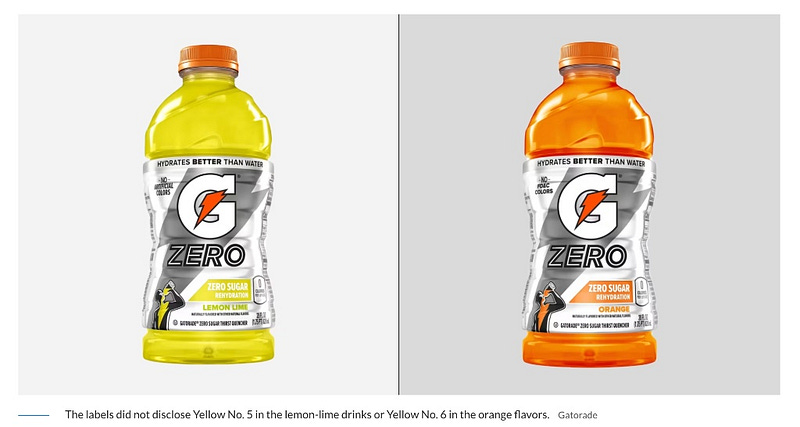
The Changeover Gap: What the Gatorade Dye Recall Teaches Every Label Team
PepsiCo promised natural colours, then recalled 122,021 cases for undeclared synthetic dyes. What went wrong, and how to avoid it in your own phase-out.
/7 min read
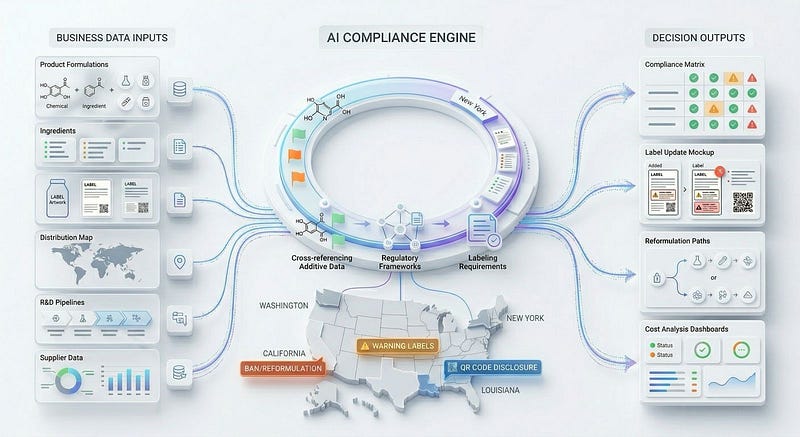
AB 418 Marks the Start of a New Compliance Model
From static standards to continuous, state-specific execution.
Newsletter
New posts, straight to your inbox.
F&B compliance insights, curated from real compliance work. Free, and you can unsubscribe any time.