
/2 min read/context graph, compliance, food, beverage, ai, fda
Evidence Trails of Compliance AI
We Mapped Every Canadian Food Regulation Into a Knowledge Graph

We built the first comprehensive knowledge graph of Canadian food and beverage regulations.
Then, we mapped the whole text into 51,397 legal provisions, 131,069 requirements, and 132,202 machine-readable rules. All connected in a knowledge graph. All traceable to source.
Here’s what the data shows.
CFIA Runs the Show
Six authorities write Canada’s food rules. One writes 82% of them.
CFIA | 81.7%
Dept. of Justice | 9.1%
Health Canada | 5.9%
If you sell food in Canada, CFIA is your primary regulator. Health Canada sets nutritional standards and health claims. Justice provides the legal framework underneath.
What Regulators Actually Focus On
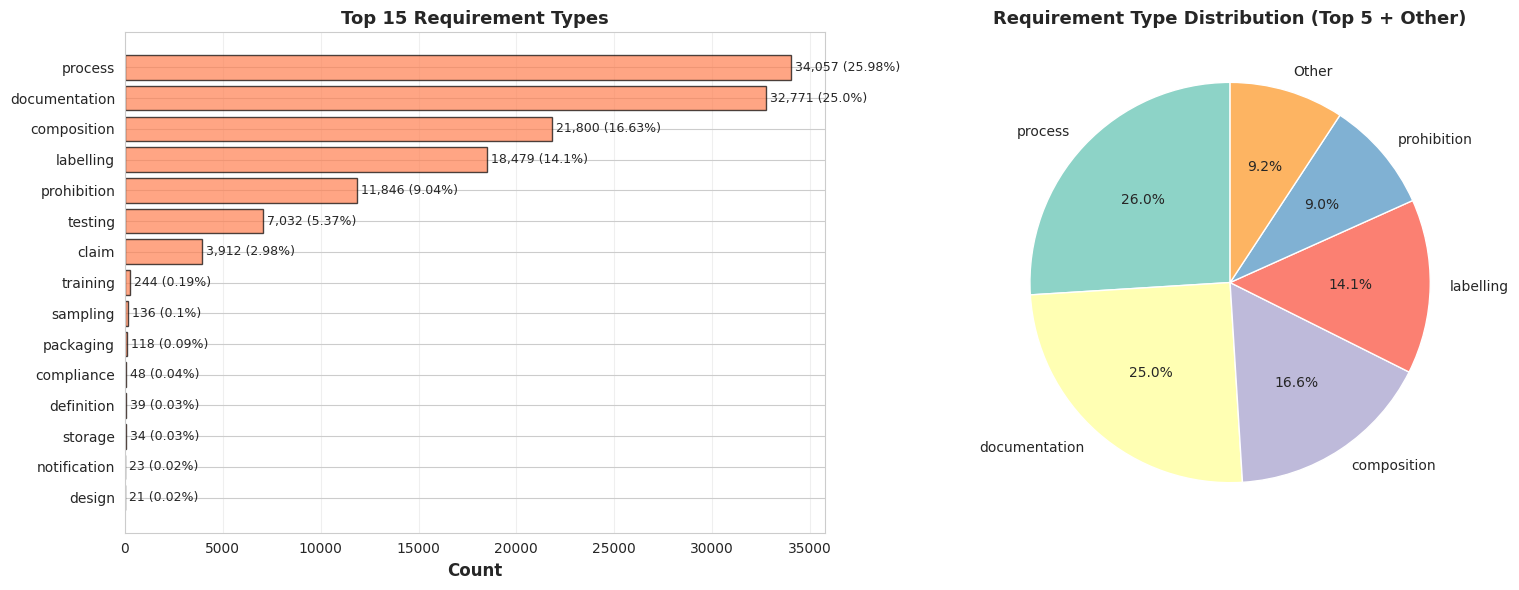
Top five of the all requirement categories cover 91% of everything.
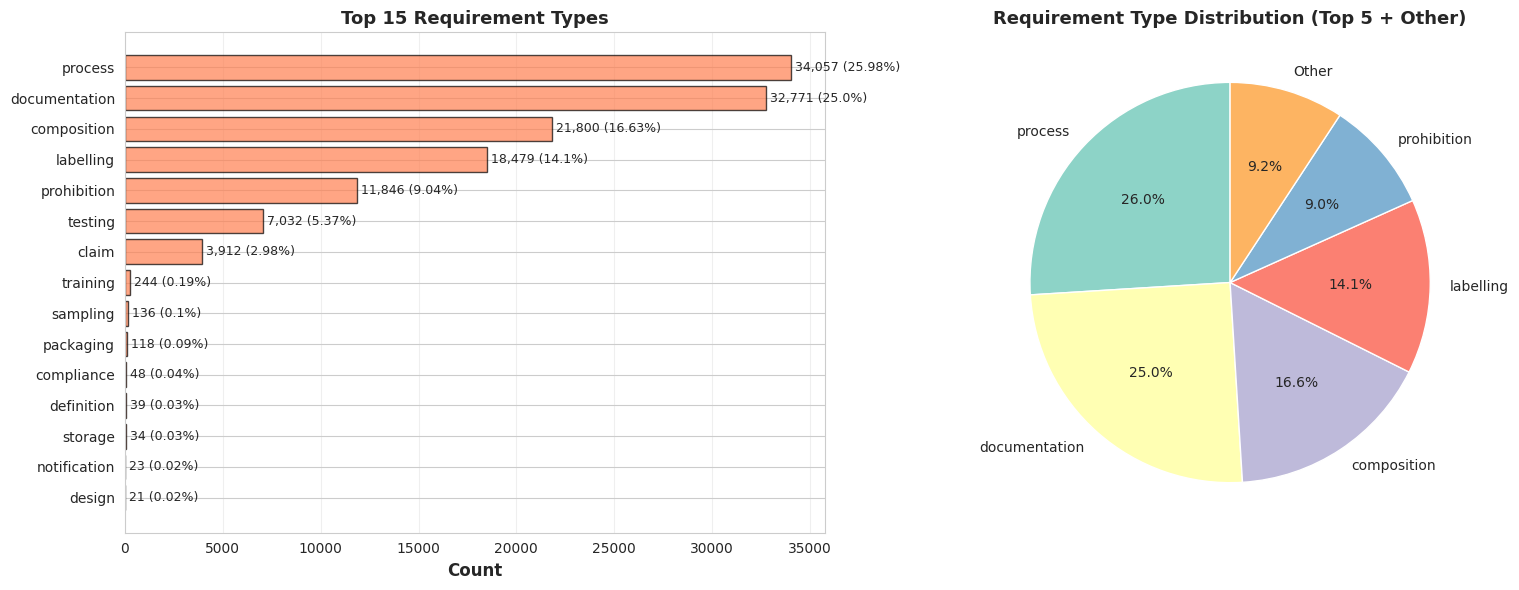
Half of all food regulation is about manufacturing process and paperwork.
Process (26%) — how food is made, handled, stored
Documentation (25%) — records, certificates, audit trails
Composition (17%) — ingredient limits, nutrient thresholds
Labelling (14%) — what goes on the package
Prohibition (9%) — what’s banned outright
9 Out of 10 Rules Are Non-Negotiable
Not all regulations carry the same weight. Some are mandatory. Some are recommendations. Some are just permissions.
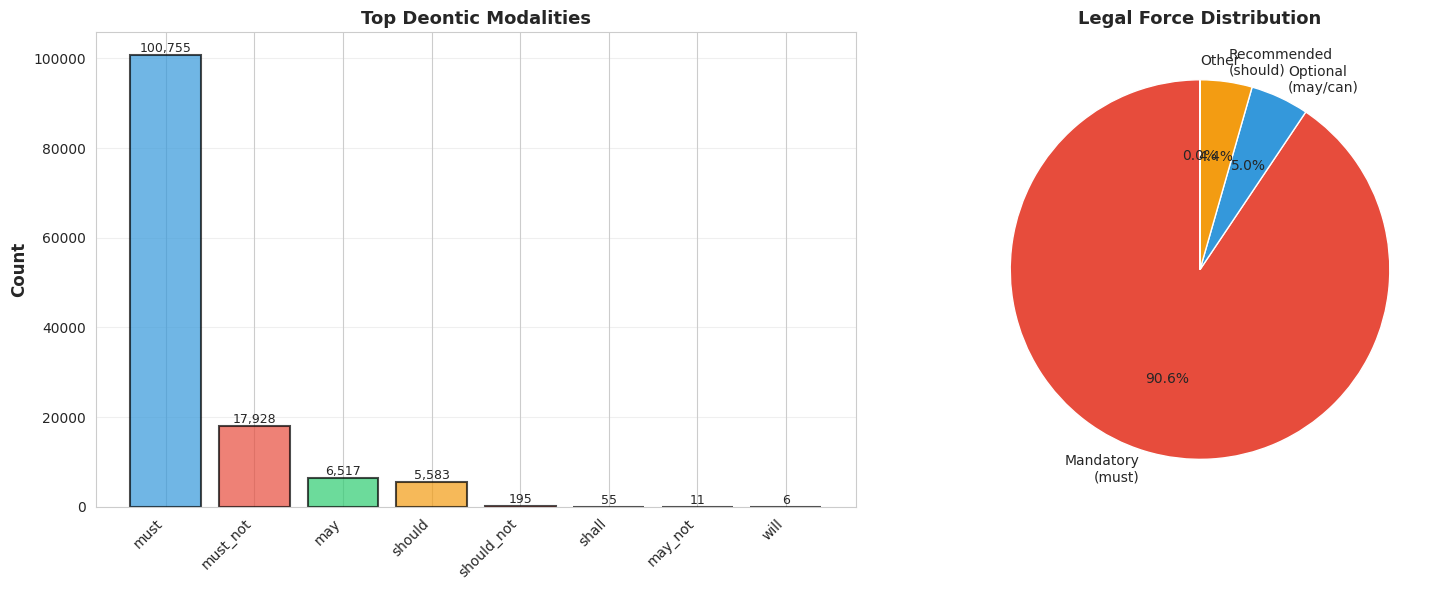
Must / must not: 90.6% of all requirements
May: 5.0%
Should: 4.3%
Nine out of ten rules are hard obligations. Miss one, you’re non-compliant. This is why manual compliance doesn’t scale — there are simply too many mandatory requirements to track by hand.
Why We Built It as a Graph
Regulations form a web, not a spreadsheet. A single legal provision can create multiple requirements. Each requirement has a binding force. Each connects to a testable rule.
Legal provision → Requirement → Testable constraint
We structured it this way so we can do two things:
1. Constraint satisfaction — feed in a product spec, automatically check it against every applicable rule
2. Deontic modality analysis — distinguish between what’s mandatory, what’s recommended, and what’s merely permitted
The goal isn’t just “is this product compliant?” It’s why — with a full evidence trail from verdict back to the exact legal text. Audit-ready. Inspector-ready.
What’s Next
This was the overview. I will share more insights with you.
Appendix A
Click to download jupyter notebook HTML export for reading more.
Written by

Tural Gulmammadov
Founder and CEO, Mergen AI Eliminating the barrier to market entry for food and beverage manufacturers
Keep reading
More from the blog
/1 min read
Food 4.0 is About Trust
A company cannot scale Food 4.0 operations with Food 2.0 compliance workflows.

/1 min read
Introducing Mergen AI Launch™
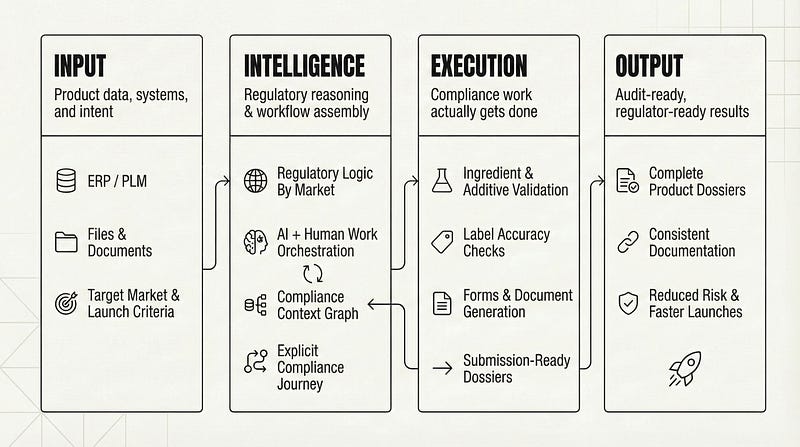
Unified Compliance Workspace for Food & Beverage Manufacturers
/5 min read
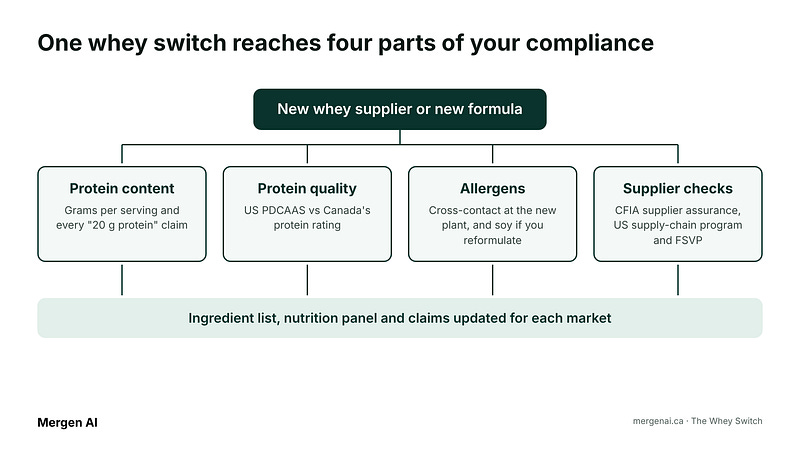
The Whey Switch: How a Dairy Tariff Fight Lands on Your Label
Tariffs and a US whey ban are forcing fast supplier switches. Here’s what that can break on your label.

Newsletter
New posts, straight to your inbox.
F&B compliance insights, curated from real compliance work. Free, and you can unsubscribe any time.